

The first Monday in May has always been the ultimate intersection of celebrity, culture, and high fashion. However, the 2026 Met Gala, held on May 4, transcended the typical red-carpet spectacle to become a profound philosophical inquiry. Under the theme “Costume Art”, the event challenged attendees and the world to view the dressed body not merely as a fashion statement but as a primary medium of art history.
Co-chaired by a powerhouse quartet—Beyoncé, Nicole Kidman, Venus Williams, and Anna Wintour—the evening served as a grand inauguration for the Costume Institute’s brand-new gallery spaces near the Great Hall. With Jeff Bezos and Lauren Sánchez-Bezos serving as honorary chairs, the event successfully bridged the worlds of legacy art, modern technology, and limitless philanthropy.
The Vision: “Fashion Is Art”
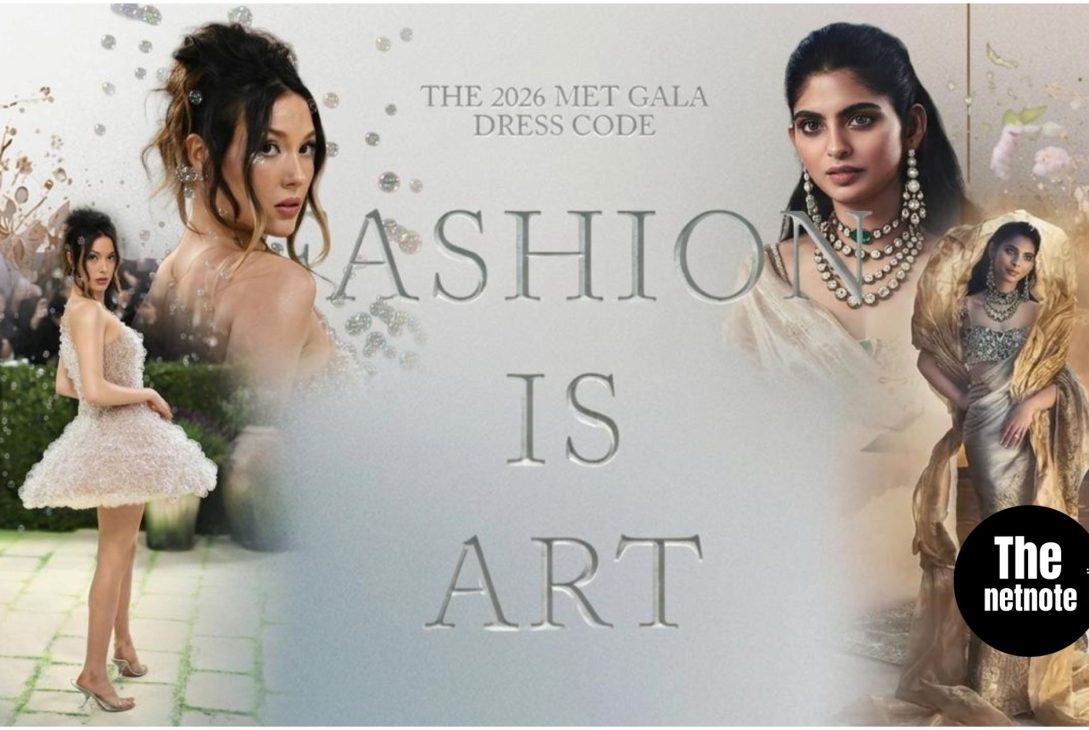
The dress code for the evening, “Fashion is Art”, was a direct nod to the exhibition curated by Andrew Bolton. The exhibition itself, running from May 10, 2026, to January 10, 2027, aims to dismantle the boundary between “fine art” (sculpture and painting) and “applied art” (garments). By pairing historical attire with classic masterpieces, Bolton argued that fashion is central, not peripheral, to the human artistic experience.
In a landmark move for inclusivity, the exhibition featured 25 new, diverse mannequins. Moving away from the industry-standard “size 2” displays, these forms reflected a wider spectrum of human anatomy, emphasising that art belongs to everybody.
Red Carpet Masterpieces: Where Engineering Meets Aesthetics
The red carpet was a sea of sculptural shapes, second-skin materials, and anatomical illusions.
Here are the looks that defined the 2026 Met Gala:
- The Kinetic Wonder: Eileen Gu in Iris van Herpen
Perhaps the most literal interpretation of the “living art” concept was seen on athlete Eileen Gu. Designed by the visionary Iris van Herpen, the “Bubble Dress” was a marvel of fashion engineering.
- The Concept: Inspired by scientific “bubble theory”, the dress explored the idea that the human body is essentially composed of empty space.
- The Technicality: This wasn’t just fabric; it was a machine. Crafted with over 15,000 tiny glass bubbles, the gown contained hidden microprocessors and air pumps.
- The Effect: As Eileen walked, the dress actively produced real, floating bubbles, turning her into a walking, breathing art installation. It took over 2,500 hours to create, proving that the future of couture lies in the laboratory as much as the atelier.
2.Heritage as High Art: Isha Ambani in Gaurav Gupta
Bringing a global perspective to the theme, Isha Ambani arrived in a breathtaking fusion of Indian heritage and avant-garde couture.
- The Craftsmanship: Designed by Gaurav Gupta, her outfit centred on a custom gold tissue saree featuring hand-painted Pichwai art—a traditional Indian style depicting the tales of Lord Krishna.
- The Jewels: The garment blurred the line between clothing and jewellery. Her blouse was embedded with over 1,800 carats of diamonds, complemented by heirloom emeralds, polki, and kundan from her family collection.
- The Story: With a sculptural jasmine hairpiece and a whimsical “mango purse”, Ambani’s look was a testament to how history and identity are woven into the fabric of art.
3. The Rebirth of the Classics: Art-Inspired Couture
Many guests took the dress code literally, transforming themselves into famous works of art:
- Heidi Klum: Stunned in a look inspired by marble sculpture illusions. Her gown utilised shading and fabric manipulation to make her appear as if she were carved from solid stone.
- Hunter Schafer: Paid homage to the Viennese Secession, wearing a gown inspired by the golden, intricate patterns of Gustav Klimt.
- Rachel Zegler & Emma Chamberlain: While Zegler channelled the drama of historic oil paintings, Chamberlain blended the styles of Van Gogh and Edvard Munch with the archival structure of Mugler, creating a hauntingly beautiful aesthetic.
- The Power of Monochromatic Blue: Yves Klein Inspiration
Simplicity became art in the hands of Hailey Bieber and Tessa Thompson. Both stars leaned into the “International Klein Blue” aesthetic—a signature ultramarine hue pioneered by the artist Yves Klein.
- The Focus: Minimalist silhouettes allowed the colour itself to be the protagonist.
- The Impact: In a room full of complex sculptures, these bold, single-colour statements stood out as a reminder that colour is one of the most powerful tools in an artist’s—and a designer’s—palette.
Iconic Returns and Avant-Garde Statements
The evening was capped off by a historic moment as Rihanna, the undisputed queen of the Met, closed the red carpet. Dressed in a draped, metallic Maison Margiela gown by Glenn Martens, she embodied the “sculptural” trend of the night.
Beyoncé made a rare and triumphant return to the Met steps after a decade, making it a family affair that set social media ablaze. Meanwhile, Madonna stayed true to her provocative roots with a ship-themed headpiece, and Katy Perry pushed the boundaries of anonymity with an intricately masked ensemble.
The Host Committee, featuring the likes of LISA, Sabrina Carpenter, and Doja Cat, ensured that the 2026 Gala felt youthful, digital-forward, and globally connected.
Conclusion: A New Era for the Costume Institute
The 2026 Met Gala succeeded in its most difficult task: making us look at our own bodies differently. By framing the “dressed body” as a canvas, the event elevated fashion beyond the commercial and into the ethereal.
As guests moved from the red carpet into the new gallery spaces, the message was clear: whether it is through 15,000 glass bubbles or a hand-painted saree, fashion is a central form of art that documents our history, expresses our soul, and shapes our future. The “Costume Art” exhibition isn’t just a display of clothes; it is a celebration of the human spirit’s endless desire to create beauty.