

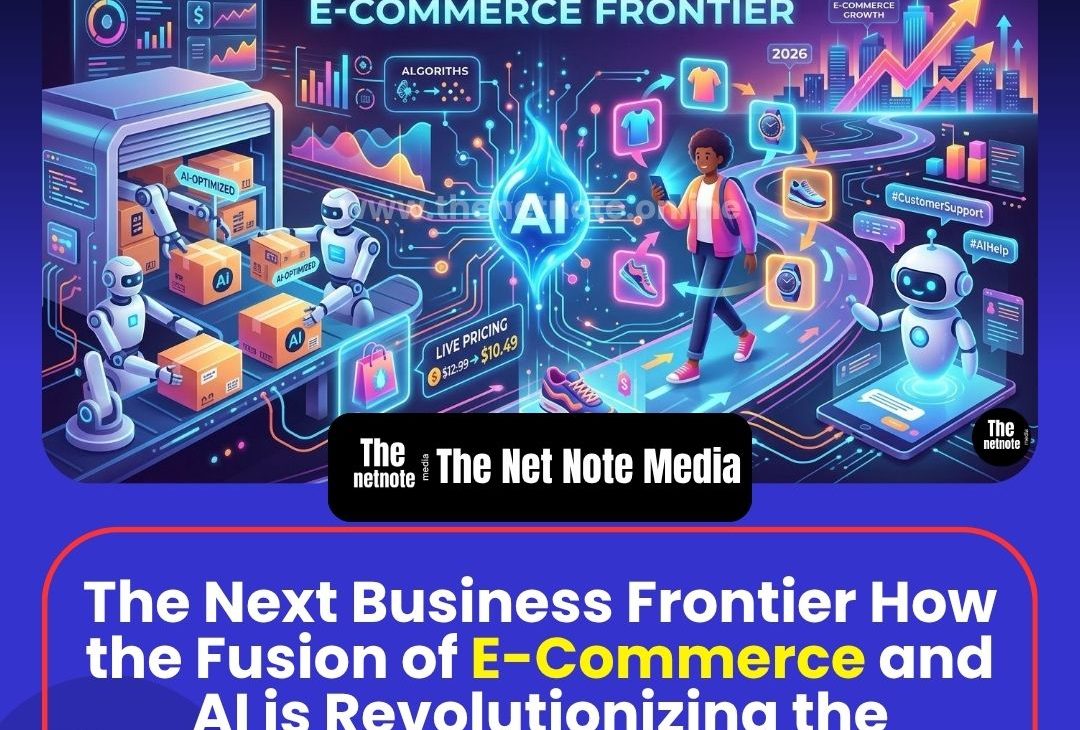
The modern business landscape is a fast-moving train. In an era dictated by rapid technological shifts, enterprises no longer have the luxury of waiting out trends to see how they perform. A few years ago, selling products online—commonly known as e-commerce—was considered an innovative edge.
Today, it is the absolute backbone of the global retail economy.
However, the evolution hasn’t stopped there. The e-commerce landscape is currently undergoing its most radical transformation yet, driven by the integration of artificial intelligence (AI). This article bypasses mere speculation and looks directly at verified data and concrete proofs from world-renowned research institutions like Statista, Forbes, and McKinsey to analyse how the marriage of AI and e-commerce is reshaping the future of commerce.
- The Meteoric Rise of E-Commerce: What the Data Shows
The post-pandemic world didn’t just adopt online shopping; it institutionalised it as a core lifestyle habit. From daily groceries to high-end electronics, consumers now prefer the convenience of digital shopfronts over traditional brick-and-mortar setups.
But exactly how massive is this growth on a global scale?
Accurate Proof 01: According to the latest market data published by Statista, global e-commerce sales are projected to surpass $8 trillion by 2026. This staggering figure will account for over 24% of total global retail sales, up from just around 17% a few years prior.
What does this tell us? While physical stores will not completely vanish, a business’s long-term survival now directly depends on the strength of its digital presence. Entering the digital arena is no longer optional; it is a mandatory survival strategy.
2. Why Does E-Commerce Urgently Need AI?
Imagine walking into a physical clothing store looking for a pair of blue running shoes, only for the salesperson to aggressively pitch you kitchen utensils and children’s toys. You would likely walk out immediately. In the digital world, this exact phenomenon happens every second, resulting in high bounce rates. This is precisely where artificial intelligence steps in to save the day.
AI algorithms analyse a consumer’s behaviour in real-time. By studying their browsing history, past purchases, clicks, and even the time spent looking at specific items, AI implements what marketers call ‘hyper-personalisation’. Instead of presenting a generic shopfront, AI curates a unique, tailored shopping experience for every single user, drastically increasing the probability of a conversion.
3. Three Main Ways AI is Disrupting E-Commerce Operations
When looking at corporate performance data, it becomes undeniably clear that AI integrations heavily boost both profit margins and operational efficiency. This disruption is primarily driven by three core pillars:
Intelligent Chatbots and 24/7 Customer Support
Historically, if a customer encountered an issue late at night, they had to wait hours for a human agent to log in and reply. Modern generative AI, built on advanced large language models like GPT-4, has completely eliminated this friction. AI-powered chatbots now communicate with customers naturally, solving complex enquiries, tracking orders, and handling returns within seconds. This immediate gratification significantly boosts customer satisfaction and retention.
Dynamic Pricing Strategies
Setting a fixed price for an item is an outdated concept. AI enables dynamic pricing, a system where algorithms automatically adjust the prices of products in real-time. The AI calculates changes based on current demand, remaining stock levels, and competitor pricing across the internet. This allows businesses to maximise profit margins during peak hours and stay highly competitive when market demand slows down.
Predictive Inventory Management
One of the biggest financial drains for any retailer is overstocking dead inventory or running out of a bestseller. AI mitigates this through predictive analytics, analysing historical data and upcoming market trends to forecast exactly what products will sell and when.
Accurate Proof 02: A comprehensive study by global consulting giant McKinsey & Company revealed that implementing AI-driven supply chain management can reduce logistics costs for businesses by 15% while optimising inventory levels by up to 35%.
- Real-World Case Studies: How Global Giants Leverage AI
To truly understand the power of this technology, we only need to look at how the world’s leading digital marketplaces operate.
The prime example is Amazon. A massive chunk of Amazon’s total revenue—estimated by industry insiders to be around 35%—is generated directly by its AI-powered recommendation engine. When the platform displays “Customers who bought this also bought…” or “Frequently bought together”, it isn’t random guessing. It is a highly sophisticated machine learning algorithm predicting your next need before you even realise it yourself.
Another titan making waves is China’s Alibaba. In their massive smart warehouses, Alibaba utilises thousands of AI-driven robots to automate the picking and packing process. This automation has allowed them to pack orders three times faster than traditional human-led warehouses, drastically shrinking delivery times.
Even service-based digital commerce platforms like Netflix and Spotify use these exact principles. Their entire business models depend on AI algorithms keeping users hooked by predicting the exact movie or song they want to consume next.
5. Navigating the Challenges of the AI Revolution
Despite the massive benefits, transitioning to an AI-powered e-commerce model is not without its hurdles. The most pressing challenge is data privacy. Because AI thrives on massive amounts of consumer data, including personal preferences and financial details, businesses face intense scrutiny regarding cyber security. A single data breach can permanently destroy a brand’s reputation and invite heavy legal penalties.
Additionally, for small and medium enterprises (SMEs), the initial implementation cost of sophisticated AI tools can be relatively high. There is also a notable talent gap; finding skilled professionals who understand how to properly integrate, train, and maintain these AI systems remains a challenge for many growing companies.
6. The Blueprint for Small and Medium Enterprises (SMEs)
While multinational corporations have billions to spend on custom AI development, smaller businesses do not have to feel left out. The democratisation of technology has made AI highly accessible.
Small business owners can set up digital shopfronts using user-friendly platforms like Shopify or WooCommerce, which offer thousands of affordable, plug-and-play AI plugins. Whether it is an affordable AI chatbot for automated customer service or an AI email marketing tool that sends personalised discounts, the barriers to entry have officially collapsed. The key is to overcome the fear of technology and adopt it incrementally.
7. Conclusion
E-commerce and artificial intelligence are no longer futuristic concepts meant for the next decade—they are the defining realities of the current business market. The data and real-world proof make one thing abundantly clear: businesses that refuse to adapt to this technological shift will inevitably be left behind.
Whether you are an entrepreneur trying to scale a brand, a marketer looking for better ROI, or a corporate leader steering a company, embracing the AI-driven digital transformation is no longer just an advantage—it is the only way forward.